
The Ultimate Guide to Fence Staining in North Texas
Mar 2026
A quality fence stain protects your investment from Texas sun, rain, and humidity. Done right, staining adds years to your fence's life and keeps it looking great. Here's everything you need to know.
When to Stain a New Fence
Don't stain your fence the day it's installed. New wood contains moisture that needs to evaporate before stain can penetrate properly. Wait 3-6 months after installation, or do the water test: sprinkle water on the wood — if it beads up, wait longer. If it soaks in, you're ready to stain.
Best Time of Year to Stain
In North Texas, the ideal staining windows are March-May and September-November. You need 2-3 consecutive days with no rain, temperatures between 50°F and 90°F, and low humidity. Avoid staining in summer's peak heat — the stain dries too fast and doesn't penetrate evenly.
Oil-Based vs Water-Based Stain
Oil-based stains penetrate deeper, last longer (4-5 years), and provide better UV protection. They're our recommendation for North Texas fences. Water-based stains are easier to apply and clean up, but typically last only 2-3 years. Either way, choose a stain with UV inhibitors — Texas sun fades unprotected wood fast.
Best Stain Colors for Cedar
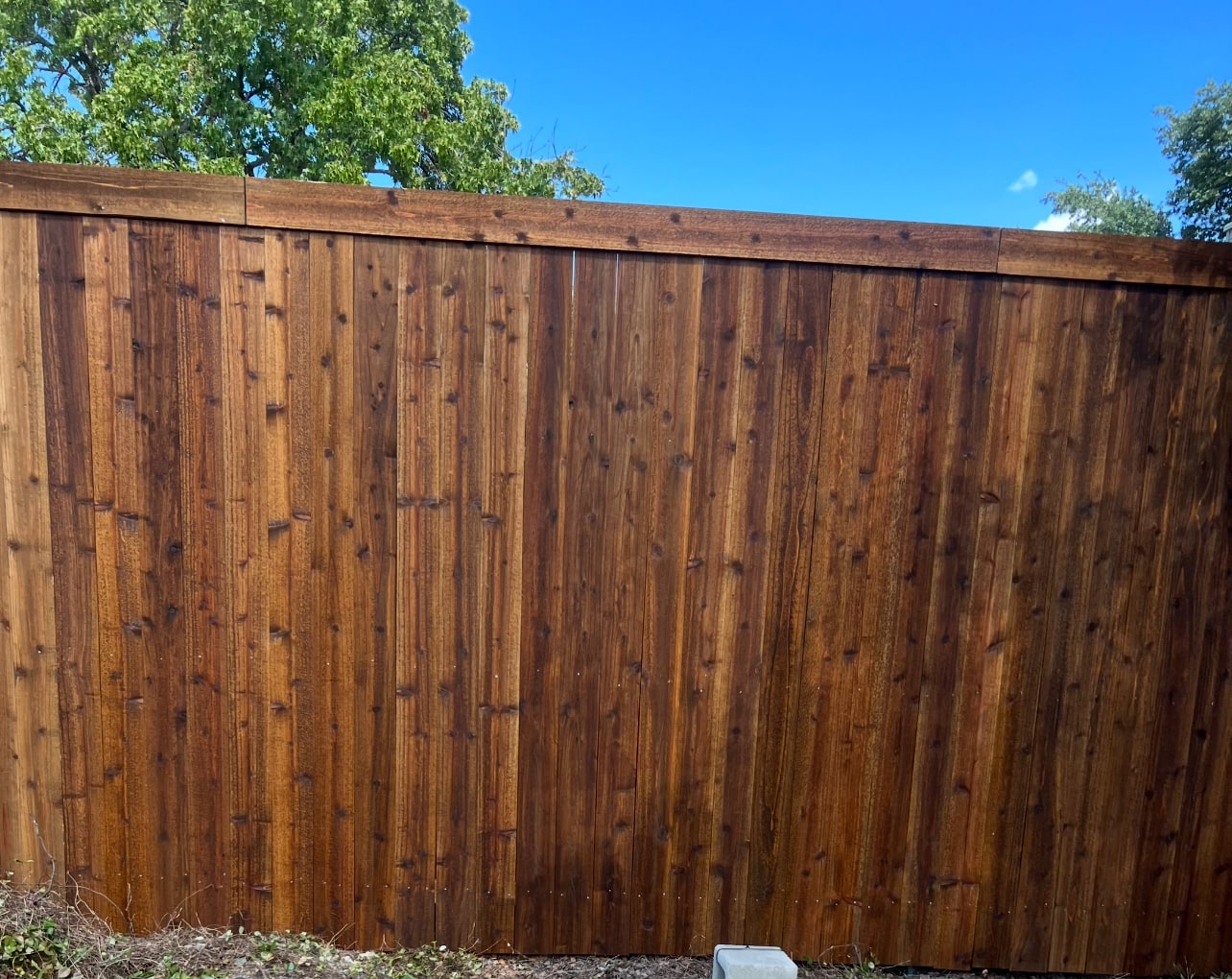
Natural cedar tones (honey, golden oak, cedar natural) enhance the wood's beauty. Dark walnut and mahogany stains are popular for a richer look. Semi-transparent stains show the wood grain while providing good protection. Solid stains hide the grain but offer maximum UV protection — best for older fences.
Preparation Is Everything
Before staining, clean the fence thoroughly. Use a pressure washer on a low setting (1200-1500 PSI) or a deck cleaner solution with a scrub brush. Remove all dirt, mildew, and old stain flakes. Let the fence dry for 24-48 hours after cleaning. Proper prep is the difference between a stain that lasts 4 years and one that peels in 6 months.
Application Tips
Apply stain with a pump sprayer for speed, then back-brush with a brush or roller to work it into the wood grain. Stain the back side first if accessible. Apply two thin coats rather than one thick coat — thin coats penetrate better and won't peel. Work in manageable sections and maintain a wet edge to avoid lap marks.
How Often to Re-Stain
In North Texas, plan to re-stain every 3-5 years depending on sun exposure and stain quality. South-facing fences get more UV and may need re-staining sooner. Do the water test annually — if water soaks into the wood instead of beading, it's time to re-stain. Regular maintenance prevents the expensive cycle of stripping and refinishing.
Professional Staining Available
Don't want to tackle staining yourself? Landeros Fence & Construction offers professional fence staining services across North Texas. We use premium oil-based stains and professional spray equipment for an even, long-lasting finish. Call us for a free staining estimate.

Need a Fence?
Landeros Fence & Construction offers free estimates across North Texas.
Get Free EstimateMore Articles
Ready to Start Your Fence Project?
Call Christopher directly or request a free, no-obligation estimate today.